



Health tests before mating — what do you actually need?
Hips, elbows, eye screening and DNA tests. Here is what each test tells you, when to do it and how to read the result.
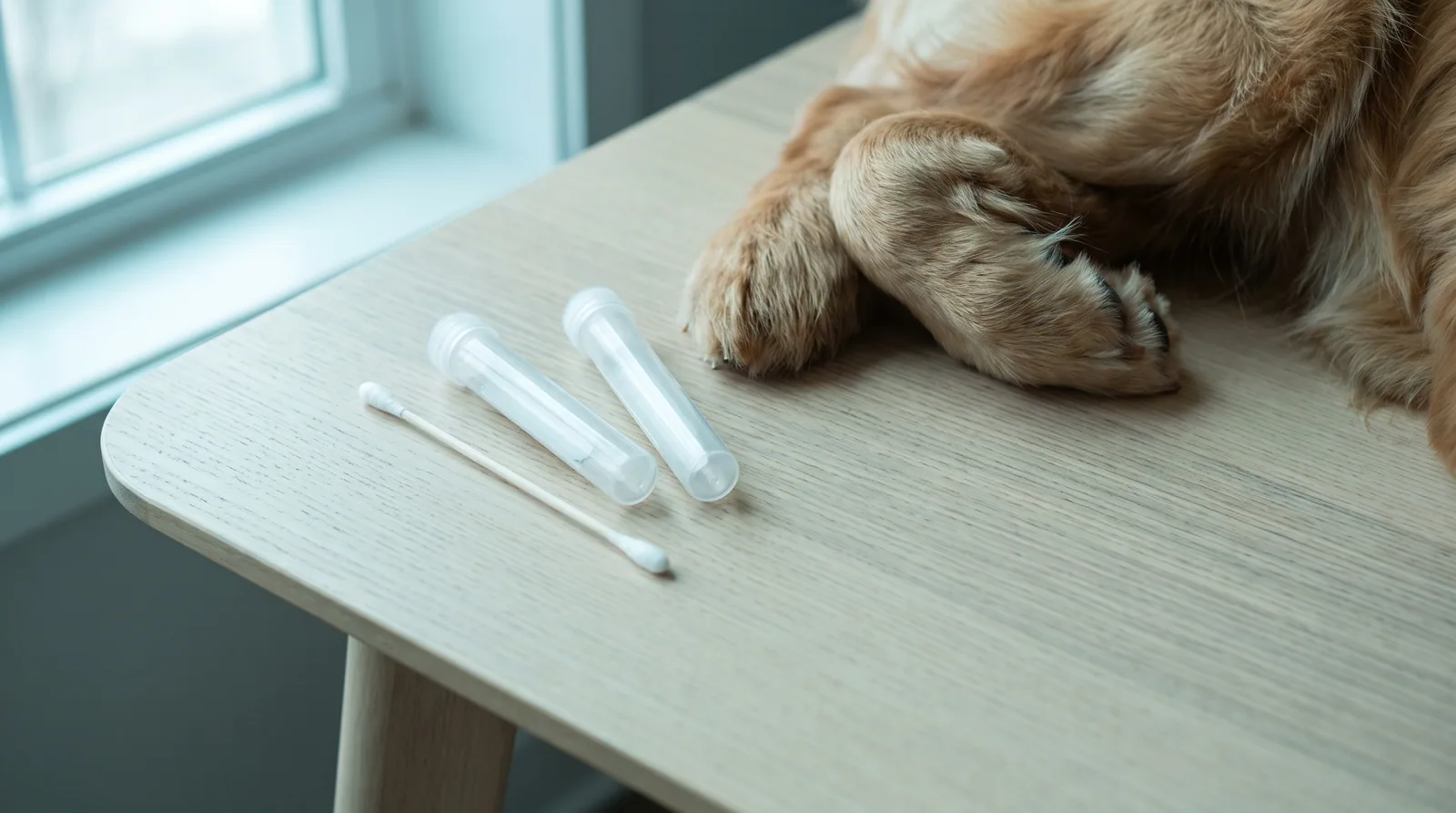
Health tests are the simplest way to make a mating safer. They take the guesswork out of the equation and give you something concrete to work with — but only if you know what the numbers and letters mean.
Hips and elbows
Hip scoring (HD) is usually graded A to E, where A and B count as clear. Elbow scoring (ED) is graded 0 to 3, where 0 means no remarks. Both are done at twelve to eighteen months at the earliest, depending on breed. A good starting point is that both parents have clear hips and elbows, and that you know the status further back in the pedigree too.
Eye screening
Eye screening is done by an ophthalmology specialist and is generally valid for a year. It picks up inherited eye conditions such as PRA and cataract. Check the date — a certificate from 2019 says nothing about the dog's eyes today.
DNA tests
DNA tests tell you whether the dog is clear, a carrier or affected for a specific mutation. Two carriers should not be mated with each other. A carrier can, however, be mated with a clear individual without any puppies becoming affected — which is important to know before you rule out an otherwise excellent dog.
What is reasonable for your breed
Breeds differ. The breed club usually has a breeding recommendation listing which tests are expected. Start there, and add whatever is known to be a problem in your particular line.
In short
Always ask to see the certificates, not just hear the results. In ProBreed the health status sits right in the profile, so you do not have to go looking.